
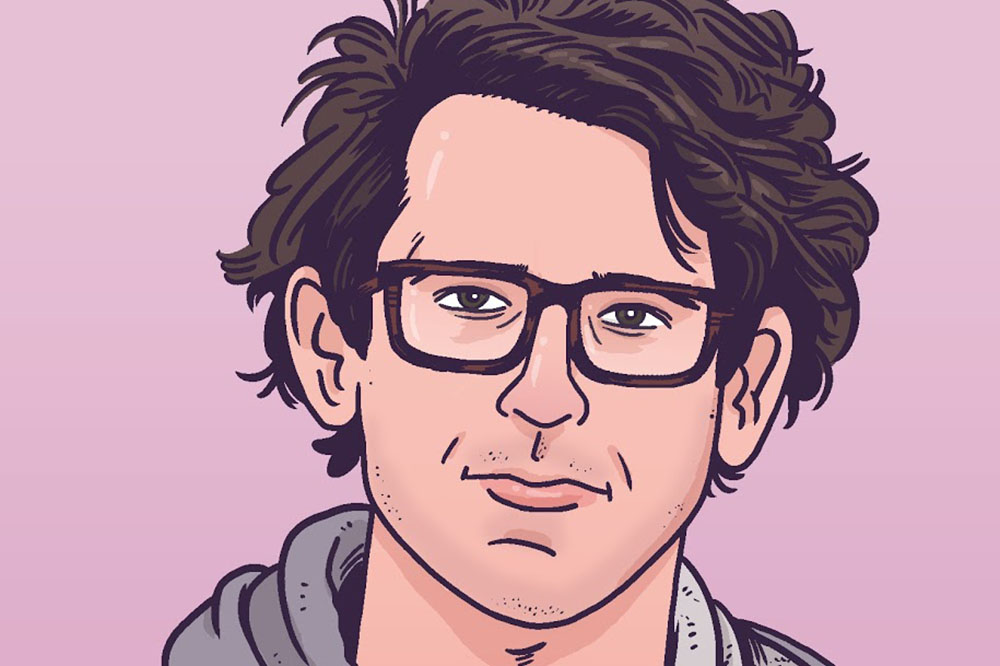
Behind the Title: Squeak E. Clean Creative Producer Michael Gross
Michael Gross is executive creative producer at LA’s Squeak E. Clean Studios, which is a global creative audio network that curates premium soundtracks for advertising, film, television, podcasts and immersive experiences. “We also collaborate with clients and our creative network of artists — across six international studios — to deliver original composition, sound design and mix, music licensing, artist partnerships, music library, experiential and spatial sound and sonic branding,” explains Gross.
We reached out to Gross to find out more about his job, his interesting job title and his love of music.
Your title is executive creative producer. Can you explain what that means and what it entails?
Though it’s relatively new, one might think of the title “creative producer” as being more on the in-house/client side, especially in tech. But there’s an important distinction: Creative producer implies a creative backbone, whereas a producer, sans the word “creative,” is (too) often relegated to a functional role supporting the creative talent.
All of my mentors have been creative producers — they just weren’t called that when I was coming up in advertising. The aim here is to transmogrify this sort-of-evolved skillset and approach and bring it further into the commercial production space.

What would surprise people the most about what falls under that title?
The title upends the traditional rails put on a producer’s role. The producer’s job is to elevate the creator’s work through process, relationships and point of view. As a creative producer, I find ways to be creative within that scope. That’s part of why I went into music; as a producer, I was trying to find a creative lane within my projects — something I could own, so to speak.
Additionally, I’m a music supervisor, and have been for 10 years. That’s an inherently “creative producer”-type job. In addition to being knowledgeable about music, you also have to be a problem-solver and very detail-oriented. The process of selecting a piece of music for a film is a wonderfully creative and passionate skillset. The folks who are good at it are icons in the industry. People I admire immensely are Liza Richardson, Madonna Wade-Reed, Randall Poster and others.
What’s your favorite part of the job?
The core of being a producer is two-fold: 1) You need to be an effective problem-solver. 2) You need to make the work better. For people like me, who are terrible at math and yet love to make a difference, being decisive, informed and consistent with your approach to tackling the day’s tasks is a skillset that is very important to me, and one I enjoy immensely. I embrace pressure — I suppose it’s a byproduct of playing competitive sports growing up.
Being a creative producer is also, at its heart, a social job. The fun is connecting with people face to face — your relationships are your biggest currency as a producer. I take that aspect of the job very seriously. I love connecting with my team, vendors and clients and asking them how I can help.
Also, of course, I love listening to music. I listen to music almost all day; I can’t turn that part of my brain off. It has to be playing in my house in every room — I’m obsessed, probably to a fault. My wife makes fun of me for uselessly not being able to fix anything around the house.
What is your least favorite?
Interfacing with those who don’t do the necessary prep. When my team and I get on a call, I want them to be equally as prepared as I am; it’s about giving and showing respect for the project and the people involved.
I’m also not a fan of the terms “ASAP,” “My only thing is…” (it’s never your only thing) and the granddaddy of them all, “organic.” Can we please retire these phrases from the ad lexicon? Also, never send me a Jet track as a reference ever again. (Ha!)
What is your most productive time of the day?
How about a day of the week instead? Fridays. I spend all week working up to Friday, and then by Friday, I’m at peak everything: my most creative, most dad-joke-y, most snarky. All the juices are flowing on Fridays. Then it takes me all week to recover from the previous weekend of intense childcare/weekend warrior activities. When I worked at Google, they even coined the term “Friday MG” as a lighthearted dig.
How has the COVID shutdown affected the way your studio has been working? Can you talk about transitioning some artists to a WFH workflow?
It’s been a very seamless transition, in terms of using modern ways of communicating and project management. Google Meet, for example… I’ve used it for years, so onboarding at Squeak E. Clean Studios was simple. Knowing how to connect with people that way, I have that system down.
What has been lost is the ability to be in the room with your client — not just a name on an email or phone call or a talking head in a box on your computer. COVID has robbed us all of being up-close and working with clients and peers. Being in the room is always the best form of currency.
If you didn’t have this job, what would you be doing instead?
I’d want to be music supervising Quentin Tarantino films.
How early on did you know this would be your path?
I knew since school that I had to find a creative outlet with work in music. I actually had an epiphany of sorts while in college: I was walking home from class studying at Berkeley, and in the process of walking up that very large hill/small mountain to my house, I had a sudden, jarring, overwhelmingly emotional clarity of purpose (and, yes, I was sober). I knew that I had to work in music, to find a creative path forward in music and media arts. In a sense, this career path chose me.
Can you talk about some recent projects?
Prior to Squeak E. Clean Studios, I was senior creative producer at Google and oversaw the launch of the cloud-gaming platform Stadia. Before that, I held a perma-lance post as music creative director of Twitter in San Francisco and lived in London for a good while. While there I was at one point working primarily in the fashion sector doing 360 music projects. Tons of agency side stuff along the way as well. As a music supervisor/brand consultant and producer, I’ve executed for global brands like Audi, Energizer, Google, the NFL, Nissan and Samsung.
What is the project that you are most proud of?
Launching Google Stadia in 2019 was certainly a Herculean task, and one through which I grew the most as a creative producer and problem-solver/team manager. I developed new skills and worked to solve problems. I’m really proud of that global launch campaign for a new product.
The project I’m most proud of is the Grammy campaign work at TBWA\Chiat\Day. I used many skillsets holistically: I was the music supervisor, talent booker, music producer and broadcast producer and wore many more hats. I booked A-list talent like Taylor Swift and Rihanna, made a film soundtrack and more. I touched a lot of facets of the project, and it turned out beautifully. I love any project where I can maximize my capabilities.

Name three pieces of technology you can’t live without.
A record, a turntable and an amplifier. I can’t live without them. Let’s not forget: A record is a form of technology.
What social media channels do you follow?
Social media…so fun, right? So good for the planet. I have a personal Instagram for family stuff and a music-dedicated profile (@meknowingthetruth) I use for creative inspiration, visual categorization, new music discovery, following of muses, etc.
Apart from following January Jones, like everyone else, I’m a huge fan of London-based photographer Sequoia Ziff’s work (@oneseq). Big no-no’s for me are food photos and concert photos; I don’t understand the desire to post those types of pictures. Also, if Instagram is reading this, I do not need any more face masks or sweatpants, I’m good. All stocked up.
Care to share your favorite music to work to?
If I’m not on calls or working on projects for Squeak E. Clean Studios, I’m constantly in music discovery mode. There’s a process, of course, but I keep things simple and abide by the Henry Rollins model of organizing my listening: Monday through Fridays are for new music discovery, and then weekends are reserved for stuff that makes me happy, like the classics. I’m a second-generation Deadhead, so that’s usually what’s playing in the house on the weekends, along with Neil Young, Curtis Mayfield, Tchaikovsky, stuff like that.
What do you do to de-stress from it all?
I’m fortunate to live on the beach. Being able to look at the ocean while I work is an incredible privilege, and I’m eternally grateful for all that the ocean does for my mental and physical well-being.
Read the original article here.