
Photo by Shubham Dhage on Unsplash
By Amanda Drum
If you’re still wondering what an NFT is, or how Blockchain is defined, this discussion will either help or hurt your research progress. But to grasp where each fits in a broader ecosystem of new tech, we have to talk about web3. Or Web3. (The jury’s out on many aspects of the term, even whether the “w” is capitalized.)
What do you mean there’s a “web2”?
When you google “What is web3?”, even the simplest explainers start with jargon that assumes you know what “decentralized” means. So let’s back up and start with: what is web2?
Web2 is the Internet as we know it. Web2 describes the modern-day dot-com, where corporations and entities large and small own websites and services and the users of those websites…do a number of things. Including just scrolling them for a distraction.
This is called centralized: controlled by one group/person, in one place. I.e. it has a “center”. Twitter.com is owned by Twitter the company, not by its 330 million active users. Twitter’s website and web history are stored on its own servers. Twitter is, therefore, ‘centralized.’
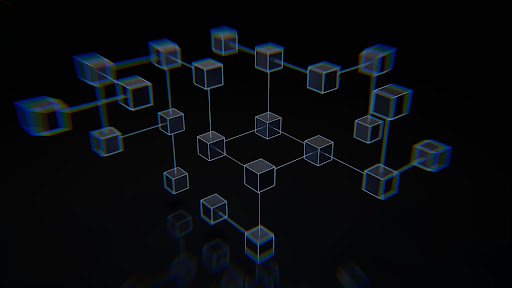 “Decentralized”–i.e., no “center”
Photo by Shubham Dhage on Unsplash
Web: the trilogy
Hypothetically, imagine Twitter.com doesn’t live on servers controlled by Twitter. Picture that, when you log onto Twitter.com, your computer gets a record of the website and its code as it exists now. You, and every other user. All users are now “owners” of Twitter.com, in this sense. These records, called ledgers, preserve Twitter’s code at any given moment. When someone tweets, everyone’s ledger gets an update.
This, at least in part, is called decentralized: controlled and shared by all users, with no central figurehead. Web3, in theory, would consist entirely of decentralized apps (what webpages would ultimately become).
How does this relate to Blockchain?
“Web3” was coined by Ethereum co-founder Gavin Wood way back in 2014, to describe a “decentralized online ecosystem based on blockchain”.
Hang on–blockchain? That accursed ephemeral concept few can grasp? It’s not that deep: when we’re talking about web3, your computer, thereby you as a user, is the “block”. The connection between each computer is the “chain”. Ethereum, who is responsible for this concept, breaks down both more thoroughly.
Remember when I said every user of the web3 version of Twitter would share a copy of Twitter.com, and thus be one of 330M owners? That can only happen thanks to “blockchain”. Twitter.com now lives on 330M individuals’ computers and counting, and updates to Twitter.com get to every computer via this chain.
Quick question: why would anyone want to take part in Web3? Do we sign up for this? Are we automatically ledger-owners the second we log into an app? Does this mean extra work for us? Let’s break it down:
Pros and Cons
Web3 has its pros and cons. As it was theorized as a way to solve security and privacy issues, the biggest pro would be security. Should someone want to shut down Twitter.com, they can no longer just “hack a server”; they would have to hack 330M plus users and ensure all of their copies of Twitter.com also go down. That’s nigh impossible. Another would be anti-censorship. No one user could suspend another without that change reflecting in, you guessed it, 330M plus users’ ledgers. While a pro in some cases, this would also work to the benefit of bad actors on Twitter.com. Therein begin the cons. In a truly neutral atmosphere, positive and negative voices both get their internet real-estate, a divisive part of web3 conversations currently.
Web3 has additional hurdles as well. Need I say, adoption? I can barely summarize web3 in a blog post. Imagine a blockchain provider like Ethereum trying to get the whole world on board. As well, if every “ledger” needs updating for apps to stay current, transactions and changes will be slow. Web3 can’t exist without blockchain, which has its own contentions: costs, scaling, and its dependency on huge amounts of electricity–a traceable environmental impact–make adoption of either slow-going.
Did you get anywhere with this explainer? Rather than focusing on definitively understanding a new and developing technology–much of which is still hypothetical–I suggest you focus on painting the best mental picture that makes sense to you. Keep reading up on it. And, for the record, we’re all fans of Twitter.com here.