
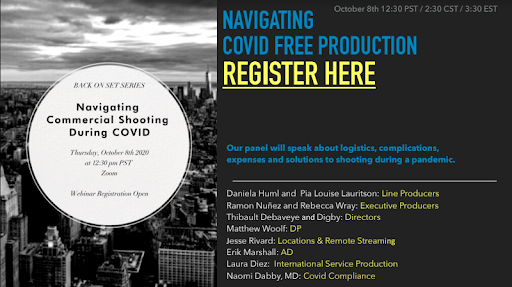
After the pitfalls of the coronavirus pandemic, particularly where live-action productions across advertising, film, and TV are concerned, the production industry is slowly getting back on its feet. Key to revamping production is ensuring the safety of all crew involved with each project, when shoots aren’t conducted remotely. While unions and the federal and local state government organizations have their own guidelines, agencies and production companies are scrambling to ensure they meet the criteria for all compliances, ensuring safe and smooth-running sets. A gargantuan undertaking leading to the obvious first question: where do we start?
Venice-based production company Durable Goods EP Rebecca Wray gathered industry-leading producers, directors, and experts in streaming and COVID-19 compliance for an informative Q&A tackling production’s burning questions: Which parties are responsible for drafting ordinances? Who calls the shots on-set? Which solutions work better than others to ensure the safest sets? The panelists convened their knowledge in one fruitful exchange with plenty of insights earned and shared:
Fellow EP Ramon Nuñez of Baby Lion Media reiterated the importance of communication, both top-down and vice versa. “Banding together and sharing information was crucial. From production and design to hair and makeup, everything ran completely differently, which sets off a domino effect. For example, if you’re working with an NFL star, you have to consider the ripple effect of what would happen if he gets infected on your set. It affects how you prepare crew, roles and sets.”
Digby, one of two participating directors, added, “We ensure temperature checks, as well as implement tiered access to sets. We have to reprogram how we work with the crew, as we’re used to being close and collaborative. We have crew members monitoring how close we’re standing together, which is useful. As a whole, I’ve been very impressed. As the pandemic continues, we’ll streamline protocols for max efficiency.”
Interestingly, these steps can even be planned ahead of time at the creative concept level. “We worked on a job where the director made set changes, and even story changes, to allow actors to interact at safe distances,” said Line Producer Pia Louise Laurtison. “We should look for scenes we can change for safety. Creativity is important, but if it serves the story for one to be set outdoors over indoors, we should always be seeking those opportunities.”
Sourcing the right location is an obvious concern–when it comes to sets, the demand is trending expensive. Productions seek more expensive locations when they have to be indoors because they require larger sets, where participants can social distance effectively. Locations scouts and service companies have their own rulebooks to follow when implementing COVID-19 best practices.
Dr. Naomi Dabby founded modMDLA to meet the ongoing COVID-19 compliance demand of sets–including an on-site testing practitioner. “It’s valuable to have a trained medical side come on set, especially when you find a positive test, to handle it,” she noted. “I have trained medical individuals to do it. The cost is very expensive, but having COVID-19 compliance officers have a medical background is super helpful.” Dr. Dabby recommends a proper chin-covering mask as daily PPE, and the company does not condone gators or bandanas. They also recommend testing every day, or every other day, during shoot schedules.
As productions continue to expand their live-action shoot capacities and COVID-19 regulations refine, the key takeaway continues to be opening channels of communication between EPs, LPs, directors, and other crew members on-set. With each bringing their own specialty and insights into best safety practices, leaders and crews must work together to ensure the safest sets amidst a potential second wave of the coronavirus heading into Fall and Winter.