


AI search is remaking the way customers find brands, but in some cases, AI is making brands invisible to their target audience. Although 40% of B2B buyers now use AI search to find vendor information, a recent Ahrefs analysis of 75,000 brands found that 26% had no mentions at all in Google AI Overview results. These brands are “invisible” because the strategies that work for traditional SEO aren’t as effective for AI search. Instead of keywords and links, AI engines are more interested in authority and trusted connections — areas where PR teams excel at delivering results.
Shifting your strategy to show up in AI search results requires tapping into the skills, networks, and expertise of your public relations team. In fact, because of how quickly search behavior and criteria are changing now, there’s never been a more critical time to invest in your brand’s PR strategy so you can protect and grow brand awareness and discovery.
What makes brands visible to AI?
Building your brand’s visibility in AI search rests on three core strategies:
- Active, consistent thought leadership programs that build a compelling narrative
- Regular earned media wins in authoritative outlets
- AI-optimized content formatting and structure for owned media.
AI search engines synthesize their search results to give a conversational answer instead of pages of links — although the AI answer may include a handful of links to its sources. AI companies are increasingly partnering with publishing houses and media outlets to use their content in search results, but AI search also scans other outlets its model considers trustworthy, like trade publications and media sites. Brands not mentioned in the answer or the links get left out of the conversation.
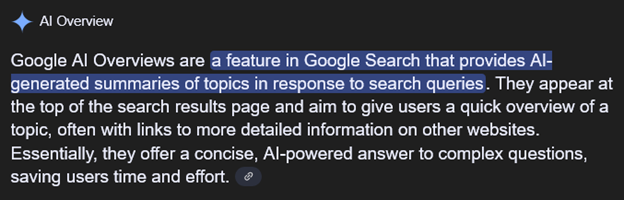
Google AI Overview’s description of itself
Develop thought leadership with a consistent narrative
If your brand or your leaders appear in outlets that AI search engines trust, your brand is more likely to appear in search summaries or links. Even if your brand isn’t mentioned by name in the search summary, having a link in the summary is very important. TrustRadius found that 90% of B2B buyers who see an AI Overview will click on the links within it to explore the sources for themselves.
What you want them to find when they click through to your media feature, blog post, byline, podcast appearance or other thought leadership content is a compelling narrative based on experience and expertise. Stories are easier for people to remember than lists of reasons to buy your product or work with your company. Stories also humanize your brand’s experts, which can help create a sense of connection between customers and your brand.
Continuously pursue earned media to build brand authority
Building a consistent earned media pipeline is cyclical:
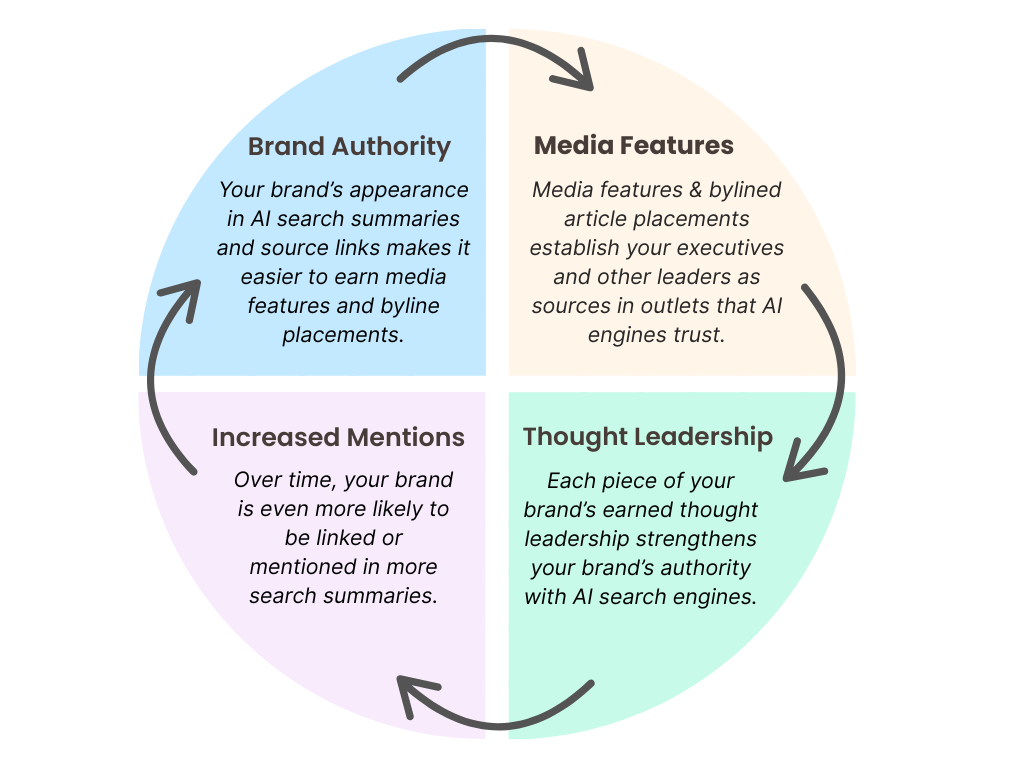
This doesn’t mean that your executives and SMEs need to be always on-call for media opportunities, although highly available thought leaders can help drive your PR and AI visibility campaigns.
Data is another path to thought leadership. Does your company have data that can answer a common customer question or explain an industry challenge? Developing a report or other media with that data builds your brand’s credibility and can generate more PR opportunities and media mentions for your brand
For example, outsourcing provider Personiv leverages its regular CFO surveys to highlight issues that companies can address through outsourcing and other strategies. The company then produces reports that lead to thought leadership opportunities. The most recent of these reports led to features in 15 media outlets, including respected accounting and CFO trade publications — the kind of outlets AI search engines look for.
Plan your brand’s content for AI visibility
Although mentions in credible third-party outlets seem to matter most for visibility, there are steps you can take to make your brand’s owned content more appealing to AI search engines.
Start with questions and answers. The LLMs that power AI search engines are trained on the questions people ask when they search via chatbot or with voice assistants. These engines are primed to search for related questions and relevant answers, so make it easy for them.
- Ask a question in the headline or first sentence of your content and then give the answer and other key information near the top.
- Use bullet points that summarize the key points in the content.
- Include Q&A and FAQ sections where they’re applicable.
This format also makes it easier for your audience to scan the content. You can expand on each point further down in the piece. For example, the bullet points at the top of this post summarize the content we’re covering in more detail here.
What questions should your content ask and answer?
- Use your company’s customer search data and combine it with ideas from AI chatbots. For example, you can ask Claude, Perplexity, or another chatbot what customers in your industry want to know about a particular product, problem, or software solution.
- Use those questions to create a reference bank you can draw from for content ideas as you create owned media like blogs, podcasts, and reports.
- Content created from those ideas can bolster your thought leaders’ authority and expertise when you pitch them for media features in authority-building outlets.
The content you produce for your brand should also use structured data like schema markup to be more visible to answer engines. Microsoft recently confirmed that its LLMs including Copilot look for schema markup data to understand the content they’re ingesting. You can work with your brand’s dev team to implement schema markup for blog posts, articles, author bios, videos, and other elements of your owned media for better AI discoverability.
Want to learn more about raising your brand’s AI visibility?
Implementing AI visibility strategies for your brand is easier when you have guidance and insights from experienced PR professionals who understand the fast changes taking place with AI. Contact us to discuss how Moss Networks can help your brand capitalize on the AI transformation as part of a holistic approach to PR and brand awareness.